Budapest

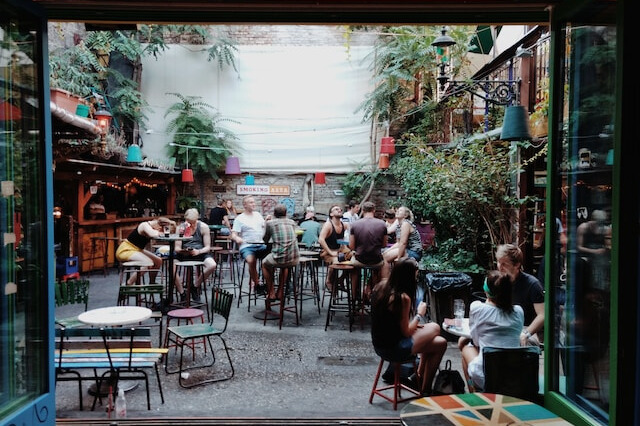
picture from the roof of the szimpla bar
picture from a old TV in the szimpla bar

Szimpla Kert


Szimpla Kert, also known as "Simple Garden" in Hungarian, is a renowned ruin bar or romkocsma situated in the Jewish Quarter of Budapest, Hungary. It is credited as the pioneer of the ruin bar concept and has become a cultural hub in the city. Initially, Szimpla Kert opened in 2002 at a different location, a few blocks away from its current spot. The original idea behind the pub was to offer an affordable and relaxed environment for people to enjoy drinks and socialize. However, in 2004, a decaying area at 14 Kazinczy Street, once comprised of homes and a stove factory, was slated for demolition. The four owners of Szimpla Kert decided to rescue this space from destruction and relocated the pub there. This new location provided more space and the ideal atmosphere they were seeking. It was named Szimpla Kertmozi (meaning "open-air cinema" in Hungarian) because of the large courtyard on the premises, which was used for screening underground and indie films. Over the years, Szimpla Kert has evolved into more than just a bar. It has become a tourist attraction and community center, offering a wide range of activities. These include movie screenings, live music performances, art exhibitions, the Kazinczy Living Library, the Szimpla Farmers' Market, and the Szimpla Bringa bicycle flea market, among others. The pub's popularity has soared, attracting both locals and tourists alike. It has a maximum capacity of 600 people, but it's not uncommon for up to 5,000 people to visit in a single night, with approximately 80 percent of them being tourists. During the summer and the Sziget Festival, the line to enter Szimpla Kert can stretch considerably longer than usual, underscoring its status as a must-visit destination in Budapest.
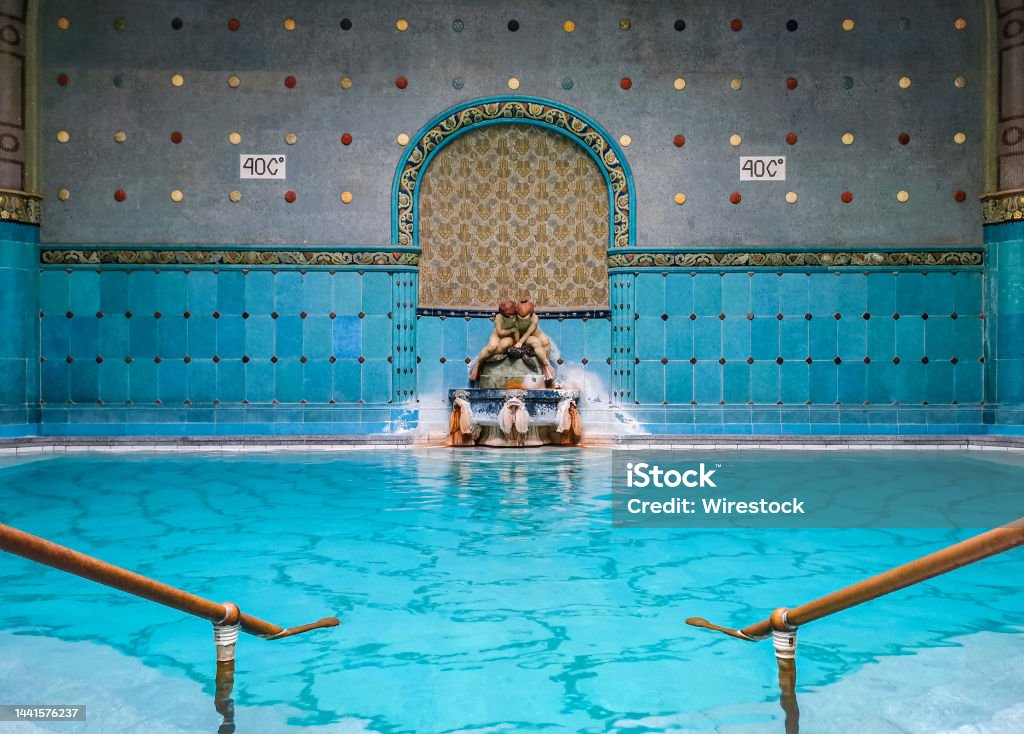
picture from spa area in Gellert Hotel
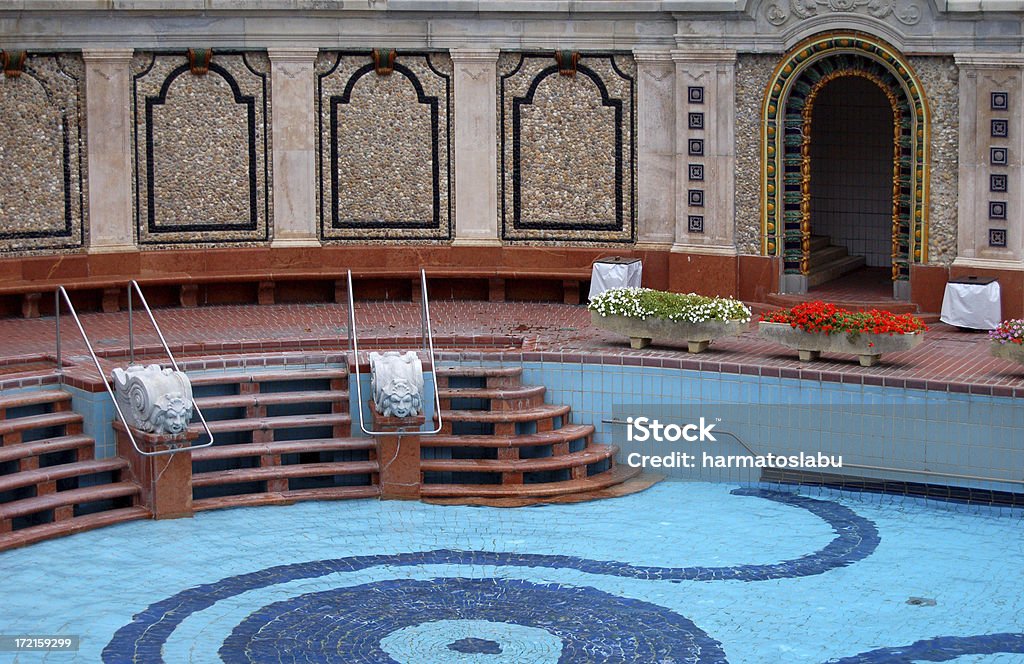
picture of the wave pool in Gellert

Gellért Bath


The Gellért Thermal Baths and Swimming Pool, also known as the Gellért Baths, is a historic bath complex located in Budapest, Hungary, within the Hotel Gellért in Buda. Constructed in the Art Nouveau style between 1912 and 1918, the complex has a rich history dating back to the 13th century when references to healing waters in the area were first noted. It served as a hospital during the Middle Ages and featured baths during the Ottoman Empire's reign. The baths experienced damage during World War II but were subsequently rebuilt. The renowned Art Nouveau women's thermal bath was damaged in the war, leading to a more modest redesign in the post-war years. However, in 2008, the Gellért Bath underwent an extensive renovation to restore it to its original splendor. The Gellért Baths complex comprises thermal baths with mineral-rich water sourced from Gellért Hill's hot springs. The water contains various minerals and has therapeutic properties for conditions like joint illnesses, spine problems, neuralgia, and respiratory issues. The water temperature ranges from 35°C to 40°C and is known for its decorative mosaic tiles. The main hall of the Gellért Spa is renowned for its Art Nouveau design, featuring a gallery and a glass roof. The complex includes saunas, plunge pools (segregated by gender), an open-air swimming pool with artificial waves, an effervescent swimming pool, and a Finnish sauna with a cold pool. Massage services are available as well. Originally segregated for men and women, all pools became mixed-gender in January 2013, although there are still two distinct sections. The Gellért Baths offer various medical services, and guests can purchase towels and swimsuits at the spa. Entrance fees vary on holidays and weekends. Indoors, there are four medical pools, two plunge pools, two underwater traction pools, a large swimming pool, and a warm sitting pool. Outdoors, there's a wave pool, a warm sitting pool, and a plunge pool, providing a wide range of relaxation and therapeutic experiences.

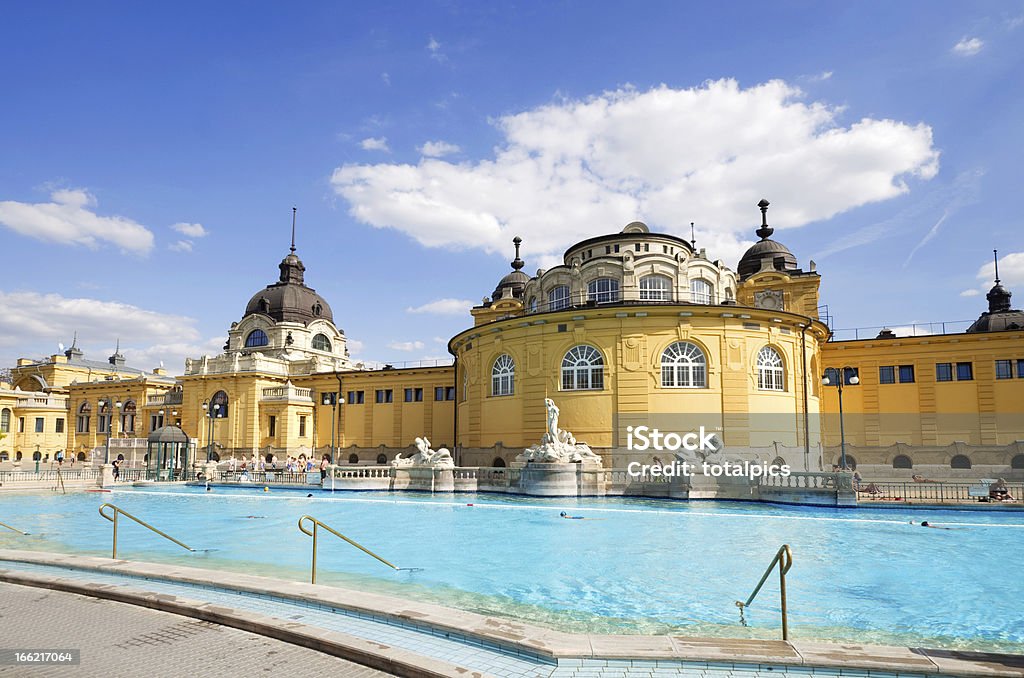
picture from spa area in Gellert Hotel
picture from heated pool

Széchenyi Bath


The Széchenyi Medicinal Bath in Budapest, Hungary, is the largest medicinal bath in Europe, known for its therapeutic properties. It is supplied by two thermal springs with temperatures of 74°C (165°F) and 77°C (171°F), containing sulfate, calcium, magnesium, bicarbonate, metaboric acid, and fluoride. The history of the bath dates back to the drilling of a deep well by Vilmos Zsigmondi between 1865 and 1875, providing a source of thermal water for the spa. Originally referred to as the Artesian spa during planning in the 1880s, it officially opened on June 16, 1913, with the name Széchenyi spa, in honor of István Széchenyi. Designed in Neo-Baroque style by Győző Czigler, construction began in 1909, costing around 3.9 million Austro-Hungarian korona and covering an area of 6,220 square meters (67,000 sq ft). Over 200,000 visitors came in 1913, growing to 890,507 by 1919. The complex expanded in 1927 to its current size, with 3 outdoor and 15 indoor pools, allowing both sexes access to the main swimming and thermal sections. To meet increased demand, a new well was drilled in 1938, revealing a second thermal spring at a depth of 1,256 meters (4,121 ft) with a temperature of 77°C (171°F), supplying 6,000,000 liters (1,600,000 US gal) of hot water daily. From 1999 to 2009, the Széchenyi thermal bath underwent comprehensive renovation. The bath complex offers pools with various temperatures, including outdoor pools ranging from 27 to 38°C (81 to 100°F) and indoor pools between 18 and 38°C (64 and 100°F). Facilities include saunas, steam rooms, and features like water streaming, whirlpools, and massaging water beams for guests to enjoy. There is also every weekend a Grand Budapest Bath Party where the Széchenyi Medicinal Bath turn into a Club!

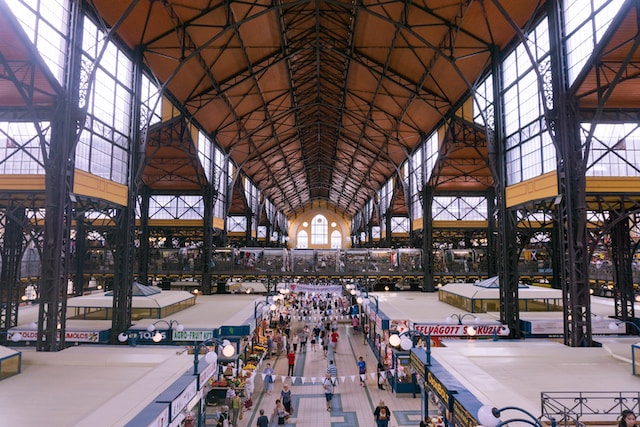
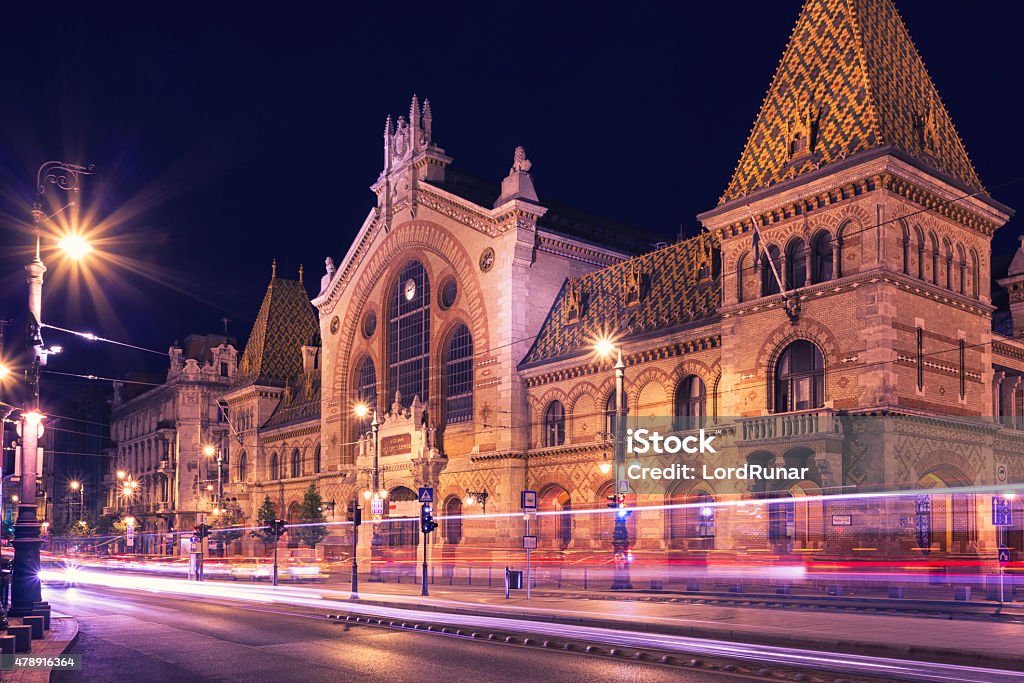
picture from market in Budapest
different picture from market

Great Market


The Great Market Hall, also known as Central Market Hall or Market Hall I (Hungarian: "Nagyvásárcsarnok"), stands as the largest and oldest indoor market in Budapest, Hungary. The concept of constructing this grand market hall was initiated by Károly Kamermayer, the city's first mayor, and it became his most significant investment. Kamermayer retired in 1896 and was present at the opening ceremony on February 15, 1897. Situated at the end of the renowned pedestrian shopping street, Váci utca, on the Pest side of the Liberty Bridge at Fővám square, the market hall was conceived as a solution to improve the city's food supply by offering inspected food for sale and organizing the retail and wholesale trade. The idea for the Central Market Hall began in the 1860s, with the primary goal of selling only inspected food. In 1879, plans encompassing the entire capital were developed, leading to the formation of a Food Committee. This committee proposed the construction of the Central Market Hall on Fővám Square, on the site of the Salt depot. However, it wasn't until 1891, after a series of resolutions and negotiations, that the site was officially granted to the capital in exchange for another site on Alkotmány Street. The building itself was designed and constructed by Samu Pecz in 1897, boasting a distinctive neogothic entrance gate and a striking Zsolnay-tiled roof. The market hall covers 10,000 square meters and features a steel structure. During World War II, the market suffered significant damage and fell into disrepair. It underwent a thorough renovation in 1991 to restore its original splendor and reopened in 1997, receiving the FIABCI Prix d’Excellence in 1999. Today, the Central Market Hall remains one of the city's top tourist attractions. The market offers a wide range of stalls across three floors, with the ground floor featuring produce, meats, pastries, candies, spices, and spirits. Popular tourist items like paprika spices, Tokaji wine, Túró Rudi, kolbász sausage, and salami can be found there. The second mezzanine floor hosts eateries and souvenir shops, while the basement houses fishmongers, pickled vegetable stalls, and specialized butcher shops. The market operates from Monday to Saturday, opening at 6 am and closing at various times throughout the week, with the earliest closing on Monday at 5 pm and the latest on Tuesday through Friday at 6 pm, and at 3 pm on Saturday.